


Chewing Tobacco 101: Dip and Snus in Canada
Chewing tobacco has a long history in North America, and it’s still a category with a loyal following, even as newer smoke-free formats like ZYN nicotine pouches have entered the market. If you’re new to the category or trying to understand the difference between dip, chew, and snus, here’s a straightforward primer.
What Counts as Chewing Tobacco
“Chewing tobacco” is really an umbrella term. The most common products in our chewing tobacco category are moist snuff products, brands like Grizzly and Skoal, finely cut or ground tobacco placed between the cheek and gum rather than chewed in the traditional sense despite the category name.
A Bit of History
Dip and chewing tobacco have a longer history in North America than cigarettes do in their modern form, with roots going back well over a century in parts of the United States and Canada, particularly in rural and agricultural communities where smoking wasn’t always practical during a workday. The category has evolved a great deal since then, moving from simple loose leaf to the finely cut, consistently packaged moist snuff most users are familiar with today. That shift also brought a wider range of cut styles and flavours than the category had decades ago, which is part of why brands like Grizzly and Skoal now offer so many variations under one name rather than a single standard product.
Dip vs. Snus: What’s the Actual Difference
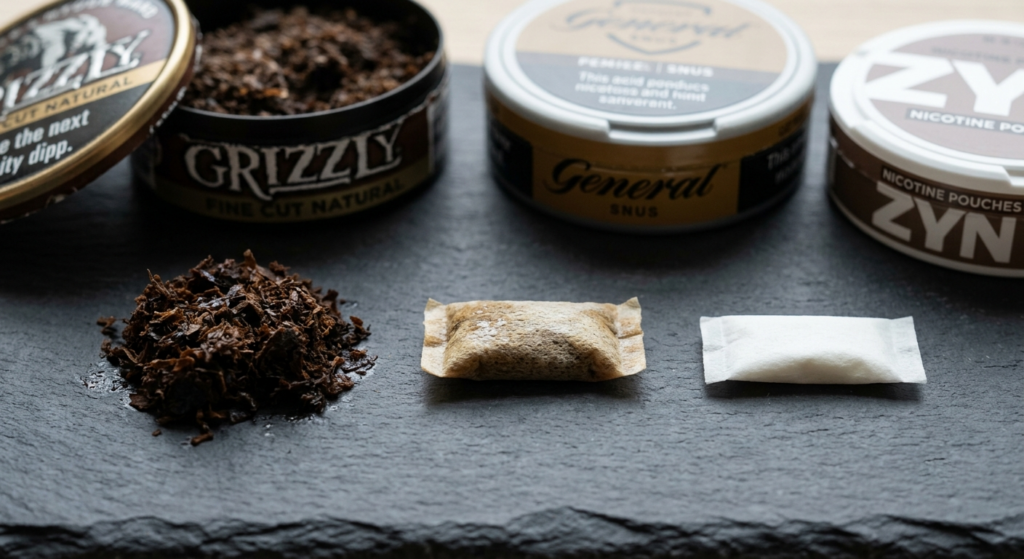
- Dip (moist snuff): Loose, moist, ground tobacco. Typically requires spitting during use. Grizzly and Skoal fall into this category.
- Snus: A Scandinavian-style product, typically pasteurized rather than fermented, often sold in small pre-portioned pouches. Generally more discreet than traditional dip since it doesn’t require spitting.
- Nicotine pouches: Often confused with snus, but pouches like ZYN contain no tobacco leaf at all, just nicotine, plant fibre, and flavouring, which is the key difference from both dip and snus.
How It’s Actually Used
A pinch or portion of Grizzly or Skoal is placed between the cheek or lip and the gum, where nicotine is absorbed through the oral tissue. Sessions can last anywhere from a few minutes to half an hour or more. Unlike cigarettes, there’s no combustion and no smoke.
A Few Things First-Time Users Should Know
- Start with a smaller portion than you think you need. It’s easy to underestimate how much nicotine a full pinch of Grizzly delivers compared to a cigarette.
- Dip and traditional chew generally require spitting. If discretion matters, a ZYN nicotine pouch may be a better fit.
- Storage matters. Keep tins sealed and away from heat, similar to how we recommend storing cigarettes and cigars above.
- Like all tobacco and nicotine products on our site, chewing tobacco is restricted to adults 19 and older.
Flavour and Strength Range
Both Grizzly and Skoal carry a range of flavours and cut styles, from wintergreen to straight tobacco, along with different strength tiers. If you’re not sure where to start, a classic wintergreen or straight tobacco option from either brand is usually the easiest entry point.
Choosing Between Chew and Newer Alternatives
Plenty of long-time Skoal users stick with the category because they prefer the ritual and tobacco flavour that pouches and vapes don’t fully replicate. Others move toward ZYN for the discretion of not needing to spit. Neither choice is objectively better.
Ready to explore the category? Browse our full chewing tobacco selection, including Grizzly and Skoal, or compare against nicotine pouches and cigarettes. Check current promotions on sales and deals, and if you’re ordering for the first time, our how to order page and FAQs page cover everything you need before checkout.